
ASE Test Prep: Auto Exam 2026
Best Fun Games, LLCEducation
4.9717.00 Reviews
- Version
- 1.2.0
- Installs
- 50.00K
- Age Rating
- Everyone
Screenshots
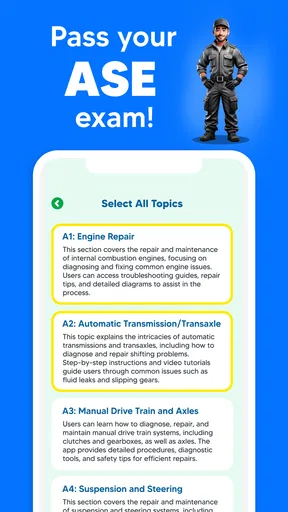
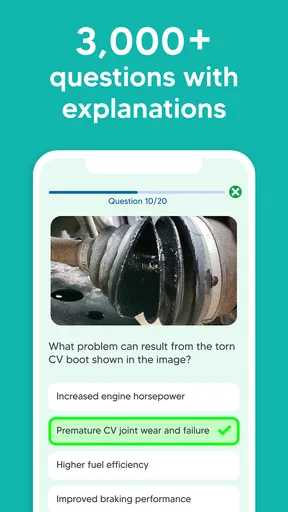
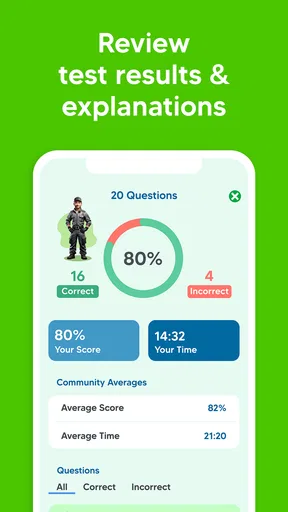
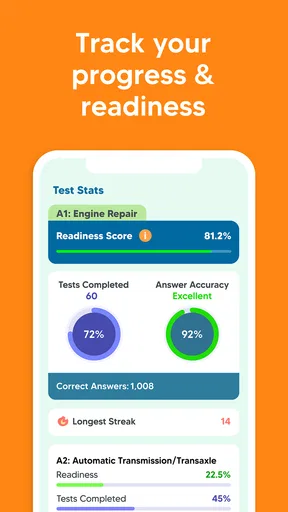
Our Review of ASE Test Prep: Auto Exam 2026
 Analysis by Appyee
Preparing for an automotive certification exam is rarely difficult because of one missing fact. The harder part is turning scattered study time into a routine that shows where your knowledge is solid and where it still needs work. That is the problem I found ASE Test Prep: Auto Exam 2026 trying to solve. It is an education app from Best Fun Games, LLC, built around preparation for the ASE A-Series Automotive Test rather than general car trivia or casual learning.
I approached it as someone with limited pockets of time: a few minutes before work, a break during the day, and longer sessions when I could sit down properly. The app is free to start, is suitable for Everyone, and runs on Android devices using version 6.0 or later. That low entry barrier matters because it lets a learner test the workflow before deciding whether it belongs in a serious study plan.
The app has a 4.9 average from around 2.2 thousand ratings, with more than 700 written reviews and over 50 thousand installs. Those figures suggest that it has found an audience among people looking for a focused study aid. They do not replace personal testing, though. A high rating can tell me that the basic experience works for many users; it cannot tell me whether the material matches my current level, my preferred learning style, or the exact gaps I need to close.
From a vague study goal to a usable routine
My starting condition was familiar: I knew I needed to prepare, but I did not want to spend every session rereading a large manual without knowing what I had actually retained. A practice app is most useful at that point because it changes the first step from “What should I study?” to “What can I answer right now?” That makes the beginning less intimidating and gives each session a clear purpose.
The app’s short store description is simply “ASE Test Prep,” while its longer positioning focuses on passing the A-Series automotive test on a first attempt. I would treat that as a study objective, not a promise. Passing depends on prior knowledge, the official exam requirements, the quality of the learner’s review, and performance under exam conditions. The app can support preparation, but it should not be the only authority for someone who needs complete technical coverage.
What I like about this starting point is the narrow subject focus. A broad automotive learning app might spend time on vehicle history, general terminology, or entertainment-oriented quizzes. This one is easier to place in a practical workflow: open it when the goal is exam preparation, answer questions, inspect mistakes, and use the results to decide what to review next.
That focus also creates the first important trade-off. If you are a complete beginner who wants lessons that explain automotive systems from the ground up, a textbook, classroom course, or structured video series may be a better first step. A question-led app is strongest when you already have some experience or study material and need a way to check recall. It can reveal a weak area, but a wrong answer may not teach every underlying concept in enough depth.
How I would set up the first session
I would not begin by trying to complete a long study marathon. Instead, I would use the first session as a baseline. Answer naturally, without looking up every item, and pay attention to the subjects that cause hesitation as well as the questions answered incorrectly. Hesitation is useful information: it often identifies knowledge that feels familiar but is not yet dependable.
A practical notebook or digital note beside the app makes this process more valuable. For each missed question, I would record the topic, the reason for the mistake, and the source I plan to consult. The reason matters more than the letter of the answer. Did I confuse two similar components? Misread the wording? Forget a testing sequence? Guess because I lacked the relevant principle? Those distinctions turn a quiz result into a study plan.
This is one of the less obvious ways to use the app. Do not treat every session as a score contest. Use early sessions diagnostically, then repeat related material after reviewing it elsewhere. The handoff from app to manual or class is where the real learning happens. The app identifies the door; another resource may provide the room behind it.
The session flow and what to do after an error
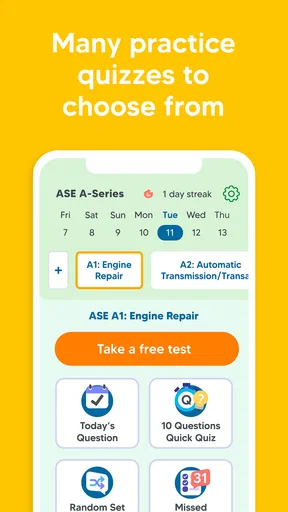
The central workflow is straightforward: open the app, work through practice material, judge each answer, and use the outcome to guide the next round. That simplicity is helpful on a phone because there is little setup between deciding to study and actually studying. It also makes short sessions realistic for a technician or student whose schedule changes from day to day.
I would divide use into three kinds of sessions. The first is a diagnostic session, used to discover weak areas. The second is a repair session, used after reading or watching a detailed explanation elsewhere. The third is a confidence session, used to check whether the same concepts remain available without immediate prompting. Mixing these purposes can make progress hard to interpret, so labeling them mentally keeps the results honest.
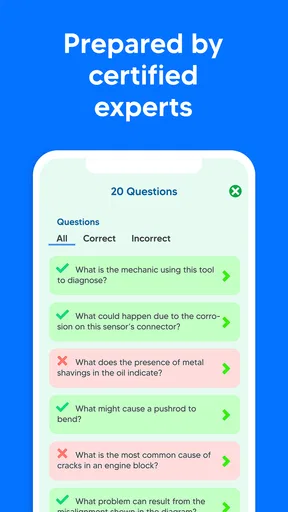
When I miss an item, I would resist the temptation to tap through and forget it. I would pause long enough to explain the correct reasoning in my own words. If I cannot do that, I have recognized the answer without understanding it. That is a crucial difference in automotive testing, where several options may sound plausible and the correct choice can depend on sequence, symptoms, measurement, or safety procedure.
Another useful tactic is to separate knowledge errors from reading errors. If the problem was unfamiliar terminology, I would add the term to a small glossary. If the problem was rushing, I would slow down on the next session. If two answers seemed close, I would consult a fuller reference rather than repeatedly guessing between them. The app can expose the pattern, but the learner has to interpret it.
Short practice also works well as a transition activity. I can imagine using it before opening a service manual: answer a small batch first, then read only the relevant section. That reverses the usual habit of passively reading everything and hoping the important parts stick. It is not a replacement for detailed instruction, but it can help decide what deserves attention first.
Where the app fits beside traditional study materials
Compared with printed practice books, a phone app is easier to carry and easier to use during an unexpected spare moment. I do not need to find the right page or remember where I stopped. That convenience is the strongest reason to keep this kind of tool available. It lowers the effort required to begin, and lowering that effort often matters more than having an ideal study plan that never gets opened.
Compared with video courses, the app is more active but less explanatory. A video can demonstrate a diagnostic process or walk slowly through a system. Practice questions ask me to retrieve information, which is better for checking readiness but can feel abrupt when I do not understand the foundation. I would use video or classroom teaching for first exposure and the app for retrieval practice afterward.
Compared with a comprehensive manual, the app is faster but narrower in how it presents knowledge. A manual can show diagrams, exceptions, procedures, and context in one place. The app is better at prompting decisions and revealing weak recall. For an experienced learner, that division may be ideal. For someone starting from zero, relying on questions alone could produce memorized answers without a durable mental model.
There is also a cost consideration. The app itself is free, which makes experimentation easy, but in-app purchases are listed at $24.99 per item. I would check what an optional purchase unlocks before paying and compare that value with a used study guide, a formal course, or another preparation resource. A free starting point is welcome, but “free” does not automatically mean the complete study path costs nothing.
Handoffs between the app, the learner, and the real exam
The first handoff is from the app to the learner’s notes. A score by itself is too blunt. I need to carry forward the topics I missed and the type of mistake involved. The second handoff is from those notes to a trusted technical reference. This is where I verify terminology and build the explanation that a multiple-choice prompt may not provide.
The third handoff is back into the app. After reviewing a weak subject, I would return to related practice rather than immediately moving to something new. The purpose is not simply to raise the next score; it is to see whether the reasoning has improved. If I still miss similar questions, I need more instruction. If I answer correctly but cannot explain why, I need deeper review before calling the topic finished.
The final handoff is from phone practice to exam behavior. I would schedule some sessions when tired, distracted, or pressed for time, because real preparation should not depend entirely on perfect conditions. At the same time, I would avoid using a high practice result as permission to stop studying. Familiar question patterns can create confidence that does not transfer to unfamiliar wording.
For someone studying while working in a shop, this workflow can be especially practical. A technician might use a short session before a shift, write down two uncertain topics, consult a manual during a quieter period, and return to the app that evening. The app becomes the checkpoint between hands-on experience and formal exam preparation, rather than an isolated quiz that disappears after each attempt.
What the experience gives you at the end
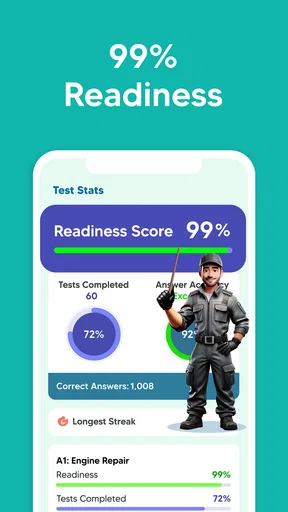
The useful result is not merely a number on the screen. The better outcome is a clearer answer to three questions: which subjects need attention, whether review is improving recall, and whether I can explain the reasoning instead of recognizing a familiar option. If the app helps me answer those questions consistently, it earns a place in my routine.
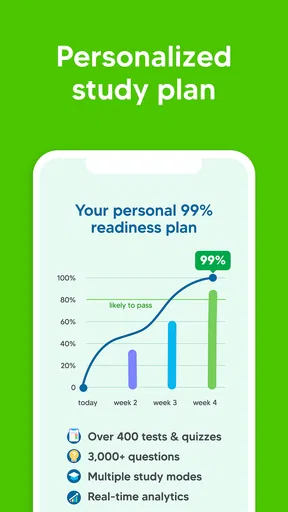
I also appreciate that the app can make progress visible in small steps. A large certification goal can feel distant, while completing a focused practice session is immediate. That psychological benefit is easy to underestimate. The danger is confusing activity with preparation, so I would pair every few practice sessions with deliberate review outside the app.
The current version is 1.2.0, and the app was released on May 21, 2025. I mention that because a relatively recent study tool may feel more aligned with current mobile habits, but it also reinforces the need to compare its material with the official exam information before relying on it heavily. Exam preparation is an area where scope and accuracy matter more than a polished interface.
For a learner who already knows the basics, the result can be a compact daily checkpoint. For a student building knowledge from the beginning, the result will depend much more on the resources used alongside it. In that case, I would judge the app by whether it helps organize review, not whether it can replace instruction.
Where the workflow breaks down
The first failure point is shallow repetition. If I keep answering the same style of question without understanding the principle, I may improve at the app while remaining unprepared for differently worded exam items. The fix is simple but important: after a mistake, explain the reasoning and verify it in a fuller source before repeating the question.
The second is overconfidence from short sessions. A few correct answers can feel encouraging, but they may represent one comfortable area rather than broad readiness. I would rotate topics and keep a separate list of uncertain concepts. This prevents the app from becoming a comfort activity where I practice only what I already know.
The third is using it as a substitute for hands-on experience. An exam-prep app cannot provide the physical context of inspecting a vehicle, selecting tools, following safety procedures, or interpreting real symptoms. If my goal includes becoming more capable in the workshop, I need supervised practice and technical references as well.
The fourth is paying before understanding the value of an optional purchase. Since individual in-app items cost $24.99, I would first use the free access to assess the question style, clarity, and fit with my study needs. I would only spend money if the added material directly supports the topics I need and complements, rather than duplicates, resources I already own.
I would also skip this app if I wanted a general automotive encyclopedia, a fully guided course, or detailed repair demonstrations. Its purpose is much more specific. That is a strength for exam-focused learners, but a limitation for anyone whose main goal is broad education or practical repair training.
Who should make room for it
I think this app is a good match for an ASE candidate who wants frequent practice, already has some automotive knowledge, and is willing to investigate mistakes outside the quiz. It is also useful for learners who study in irregular bursts and need something more convenient than carrying a book everywhere. The Everyone age rating makes it broadly accessible, although the technical subject matter is naturally aimed at people with a serious automotive-learning goal.
I would recommend it less strongly to someone who needs a complete curriculum with lessons arranged from basic to advanced. That person may become frustrated when a question exposes a gap without giving enough background to close it. A course or instructor should lead the learning process in that situation, with this app added later as a way to test retention.
My final view is positive but measured. Best Fun Games, LLC has made a focused education app that can turn idle minutes into purposeful ASE practice, and its free entry point makes it easy to try. The strongest workflow is not “quiz until the score looks good.” It is diagnose, research, return, explain, and repeat. Used that way, ASE Test Prep: Auto Exam 2026 is a practical companion for structured preparation.
My recommendation: try it if your immediate goal is A-Series exam practice and you want a portable checkpoint between deeper study sessions. Keep a manual, class, or trusted technical reference beside it, and treat every missed answer as a lead for further learning. If you do that, the app can help transform an uncertain starting point into a more disciplined path toward exam readiness.
Verdict
Strengths of ASE Test Prep: Auto Exam 2026
- Covers ASE certification topics in a focused, exam-oriented format.
- Practice questions help identify weak areas before test day.
- Short study sessions work well for busy mechanics and students.
- Progress tracking makes it easier to monitor preparation over time.
- Useful as a portable supplement to classroom or hands-on training.
Limitations of ASE Test Prep: Auto Exam 2026
- Question quality and accuracy may vary across individual test sections.
- Some advanced topics may require additional manuals or shop experience.
- The app cannot replace official ASE information or current test guidelines.
- Repeated practice can feel limited if the question pool is small.
- Full access may require payment or include advertisements.
Other Releases by Best Fun Games, LLC
View All
ASVAB Practice Test 2026 Prep
Education4.2

CDL Prep Practice Test 2026
Education4.6
Similar Picks in This Category
View All
Duolingo: Language Lessons
Duolingo4.7

Google Classroom
Google LLC2.8

Unacademy: Learn & Crack Exams
Unacademy3.2

Bible App for Kids
Life.Church4.4

Cake - Learn English & Korean
Cake Corp.4.7

Brainly: AI Homework Helper
Brainly4.5
Frequently Asked Questions
What is ASE Test Prep: Auto Exam 2026, and who is it designed for?
ASE Test Prep: Auto Exam 2026 is a mobile study app for people preparing for Automotive Service Excellence certification exams. It is intended for aspiring automotive technicians, students in automotive programs, apprentices, and experienced mechanics who want to review important concepts before taking an ASE test. The app can also be useful for identifying weak areas and organizing independent study sessions.
Which ASE certification subjects can I study with the app?
The available subjects depend on the app version and its current content library, but ASE Test Prep: Auto Exam 2026 is generally built around practice for common automotive certification categories. These may include areas such as engine repair, brakes, electrical and electronic systems, suspension and steering, engine performance, and other technician specialties. Check the in-app subject list before downloading to confirm that your specific ASE exam is supported.
Does the app contain real ASE exam questions?
The app should be treated as a preparation and practice resource rather than an official copy of the ASE examination. Its questions are designed to resemble the type of knowledge and reasoning required in certification tests, but they may not be identical to questions used in the real exam. Use the explanations and practice results to reinforce learning, while also consulting official ASE materials and hands-on training.
Can I use ASE Test Prep: Auto Exam 2026 without an internet connection?
Offline access depends on how the app stores its question banks and whether certain features require an active connection. Basic practice content may be available after installation or after downloading a subject, while updates, advertisements, account features, or premium verification may require internet access. Before relying on the app during travel or at a workshop, open it in offline mode and confirm which tools remain available.
Is ASE Test Prep: Auto Exam 2026 enough to pass an ASE certification exam?
The app can be a convenient supplement, but it should not be considered a complete replacement for professional instruction, repair manuals, practical experience, or official ASE study resources. Passing an ASE exam requires understanding diagnostic procedures, safety practices, terminology, and real vehicle systems—not simply memorizing answers. For the best results, combine the app’s quizzes with structured study, hands-on work, and a review of the official test specifications.
